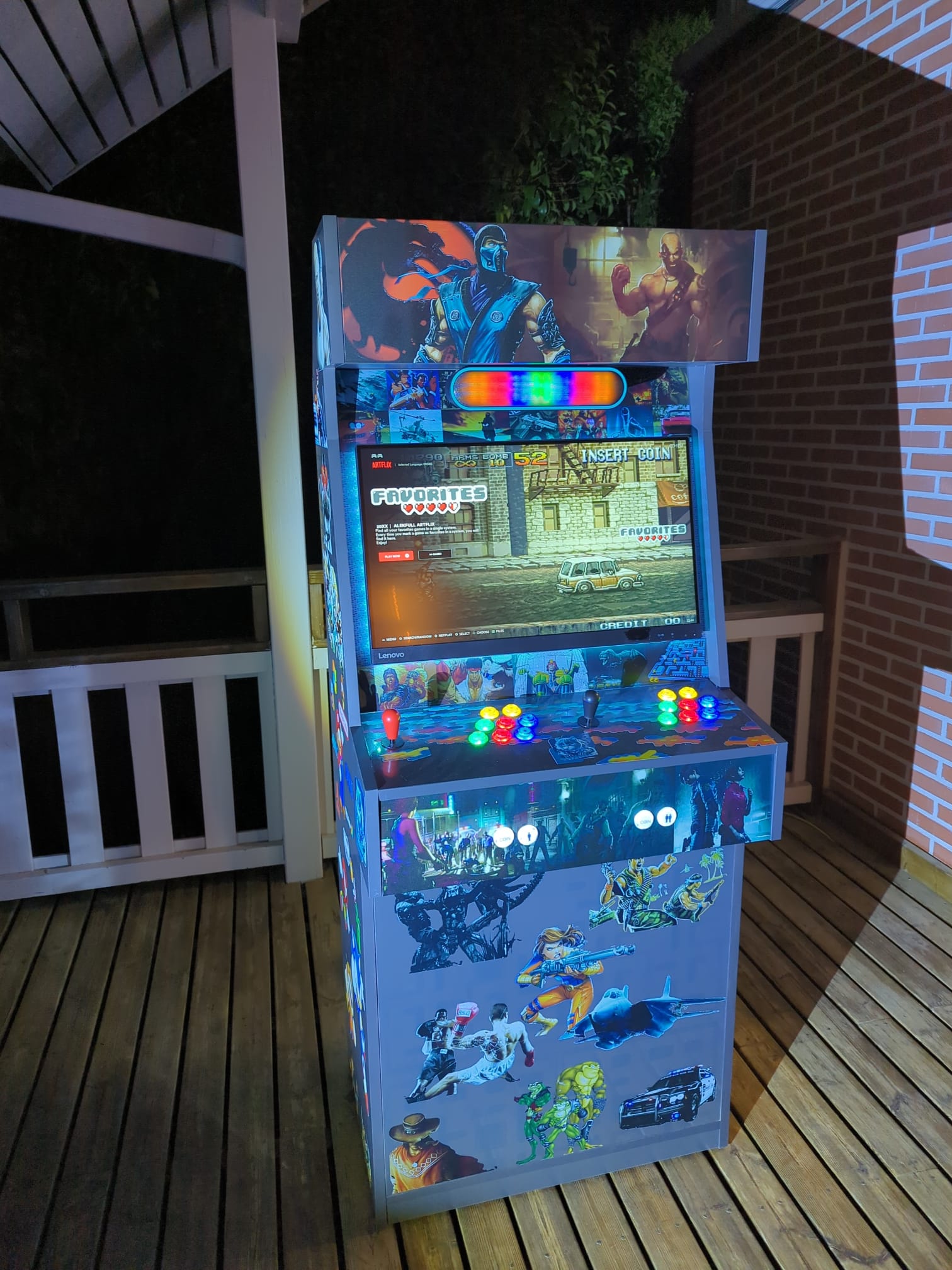
Retro Arcade

For this first project of Motanienses, we are going to create an Arcade with the games of our childhood.

The final project will consist of the Arcade machine just as we remember it, including its cabinet, but we will also offer a simpler version for those who do not want to complicate things too much or have a slightly smaller budget.

Introductory Video

Below I present to you the first video where I introduce the completed Arcade and tell you what we will be covering throughout the process. If you've come this far and haven't seen it yet, I recommend you watch it to understand the scope of the project.

Please, see the Disclaimer section into our main page before using the information that these pages contain

A bit of History

This is not the first project of this kind that we have undertaken. Over the last 4 years, we have been improving successive versions, learning from mistakes, and using different platforms.

As you can deduce from the following images, it has not been an easy path, but it has certainly been a lot of fun:
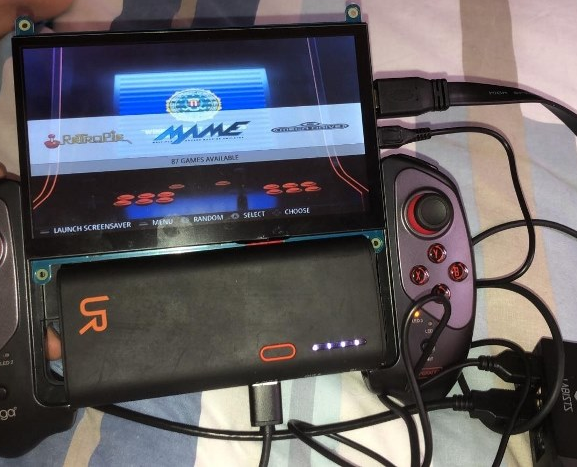
Retro V1
Version 1

Handheld version, the first retro arcade I've made.
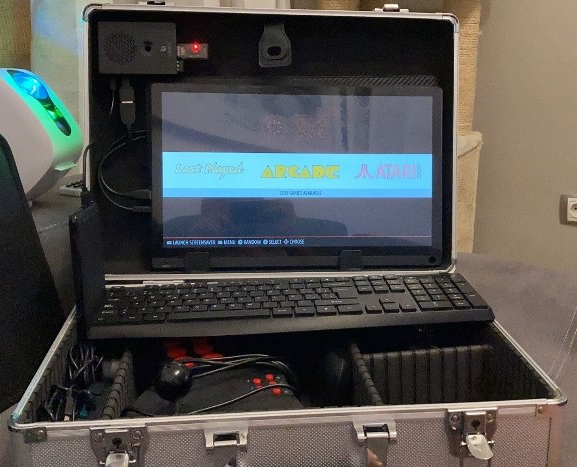
Retro V2
Version 2

Second version, into a rigid briefcase, but not so portable.
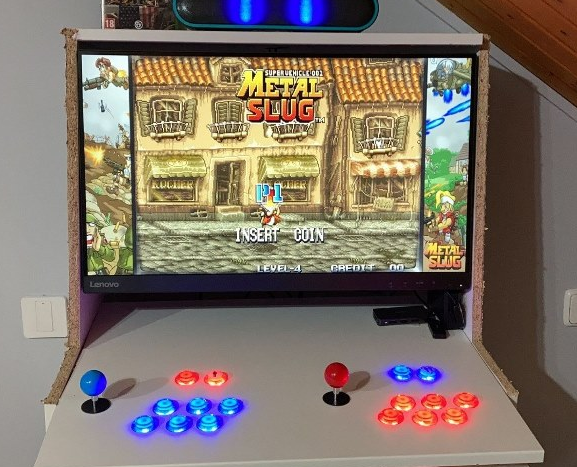
Retro V3
Version 3

Carpentry failed attemp.
The Cabinet

Who made it?

First, I want to thank the team at Viherma, our wood and DIY store in Valdetorres de Jarama (Madrid), for their full cooperation and excellent work making the cabinet.

As you have seen in Model 3 of my Retro-Arcades that I showed you earlier, I tried to do it myself without much success.

I especially want to mention Gabi for materializing it and helping me get it into the house, and both Víctor and Diana for enduring the intense spiel I gave them for its manufacture.

Why this design?

After searching the Internet and find several plans for doing this, I found this one, that it's not perfect but it worked with my ideas.

Mobirise Website Builder
Viherma

Used Plans

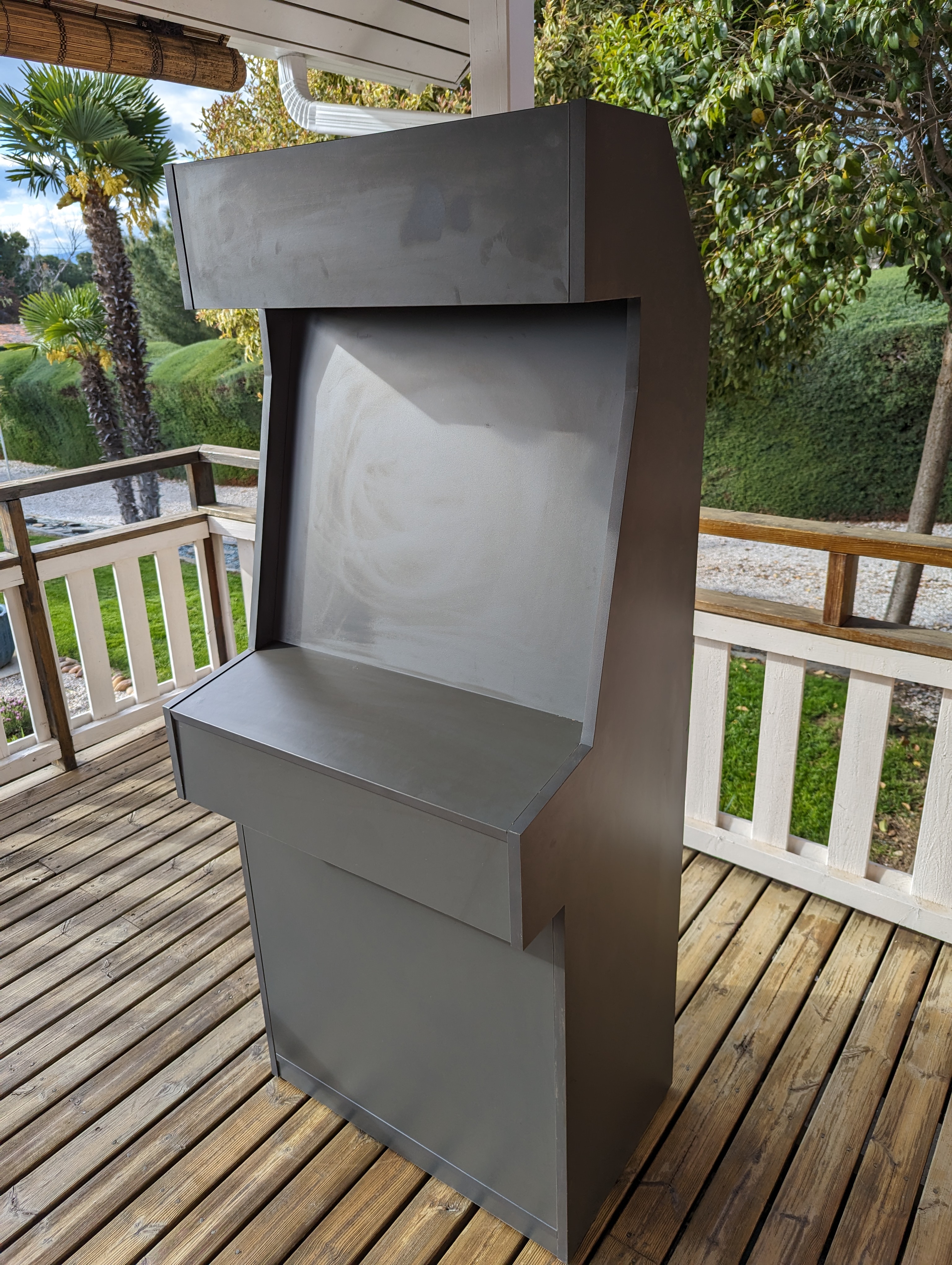
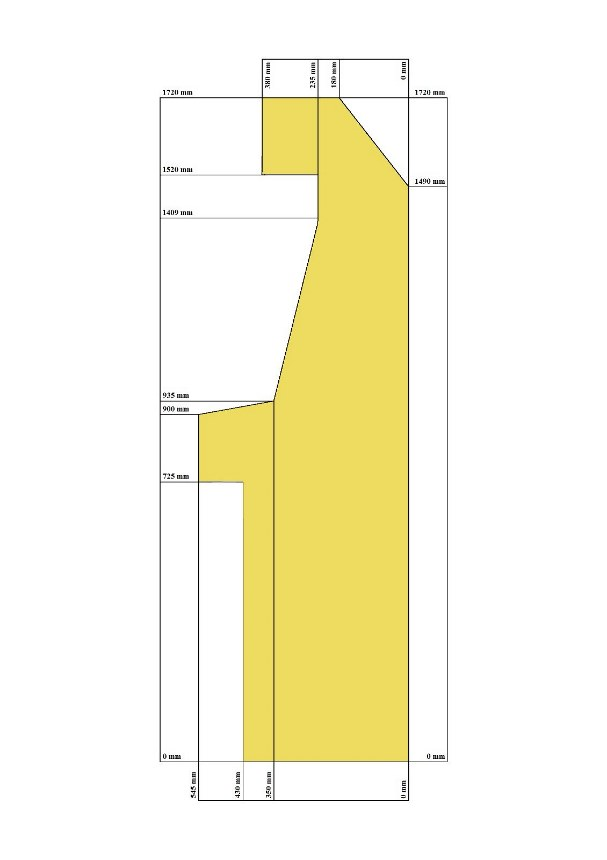
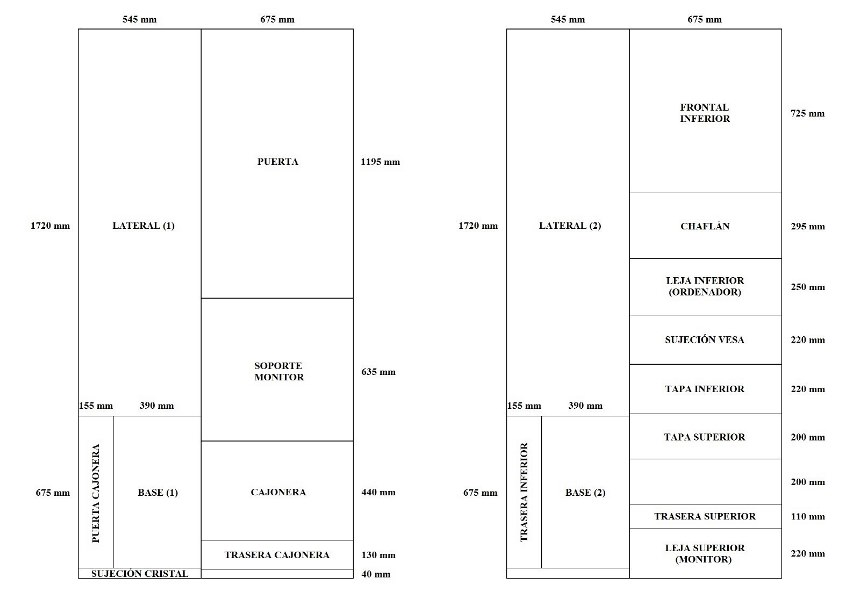
After searching the internet, I located the following plans that served as a base for creating the cabinet, although it is true that they did not fully meet my expectations. Originally, the machine was much more enclosed, and, as I knew from my previous experiences that it would not be easy to manipulate and wire everything if there were not enough doors, I decided to create two different accesses to the machine: one front and one back.

I do not remember the exact source of the plans, which is why I do not mention it: I downloaded more than 30 plans and none of them convinced me in terms of size or functionality. I apologize to the original author and if you comment, I have no problem mentioning them and adding the corresponding links and references.

If you want these plans, just right click over the image and choose "Save image as" option in your browser.

Side Plan
Side Plan

Side view of the machine (requires 2 identical pieces)

Exploded Plan
Exploded Plan

Here you have the breakdown of the retro, including panels for the previously mentioned sides.

Important notes...

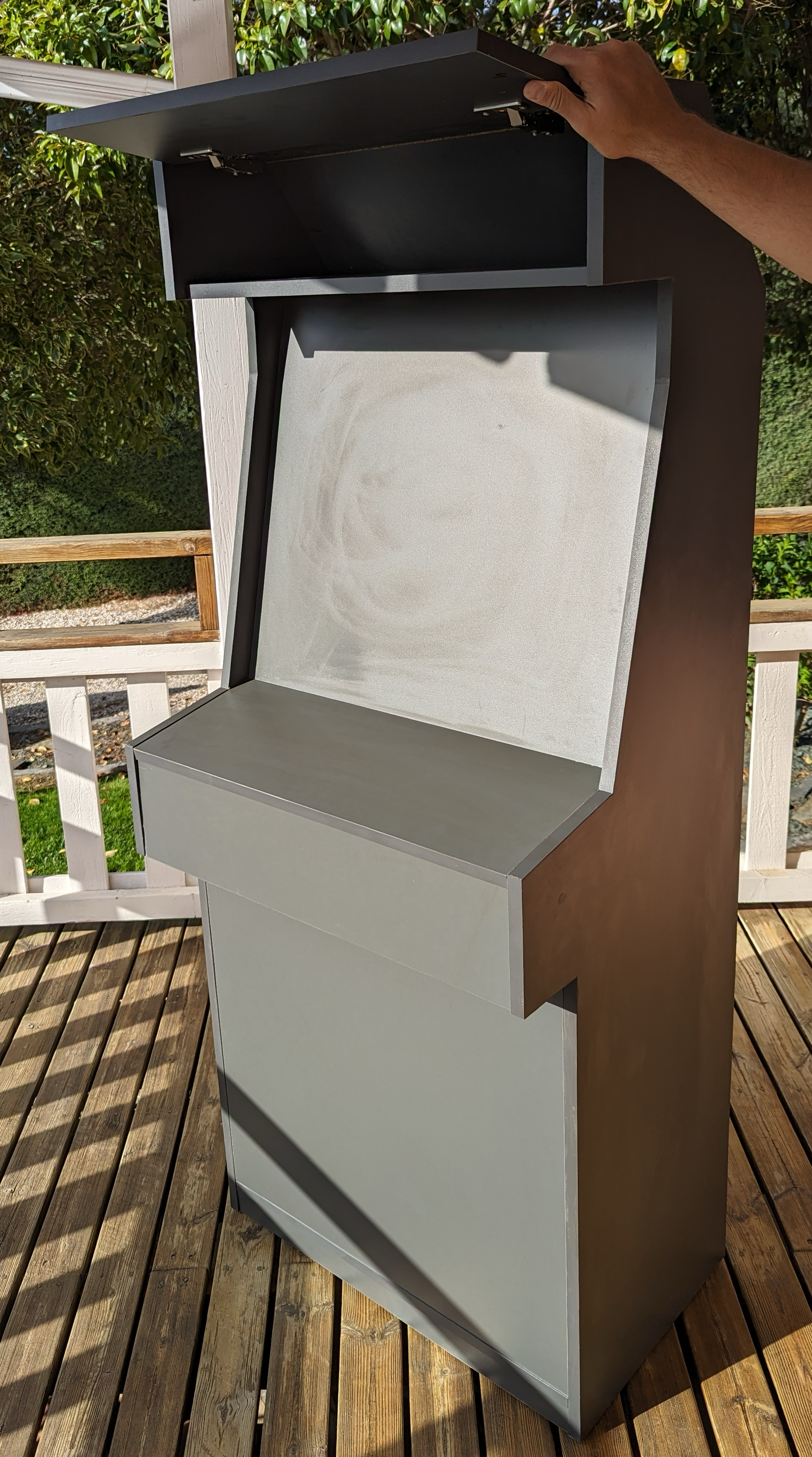
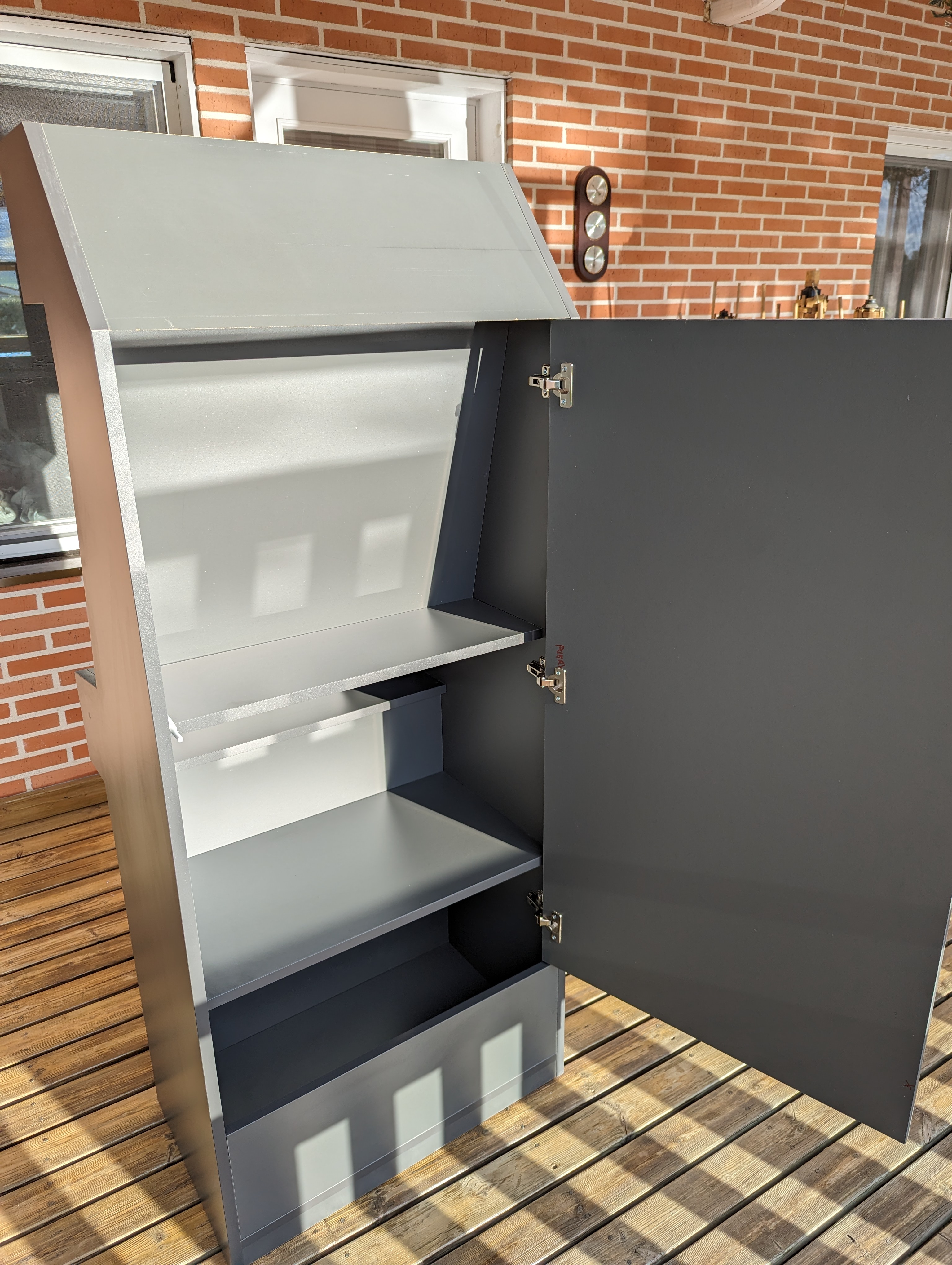
I recommend making at least a couple of doors on the machine for easy access. I have come up with the two that I show you in the photos, but it is up to your discretion how to do it better:

Front Door
Front Door

Will serve for easy access to the USB ports.

Back Door
Back Door

Will be useful in the assembly and storage of the different controllers you want to use.

Vynils

Who did the vynil work?

The original design of the vinyls was done by me, using beautiful fanarts that I found on the website of Arcade Artwork.

As I am not particularly an artist and was unaware of the intricacies of printing, I located the team at Langayo in Madrid, who advised me wonderfully and did an exquisite job of high quality. I want to mention María José in this case for having painted all the vector shapes on the vinyls with tremendous professionalism.

Langayo
Side Vynil
Side Vynil

Right side of the machine

Front Vynil
Front Vynil

Vynils in front of the machine

Vectorial Download

I leave you the original vector files in XCF format of GIMP, a free tool for professional image editing.

  1. Top: 66.8 cm wide x 20 cm high - opaque
  2. Bezel: 66.8 cm wide x 59 cm high - transparent
  3. TopButtons: 66.8 cm wide x 24 cm high - transparent
  4. FrontButtons: 66.8 cm wide x 15.6 cm high - opaque
  5. BottomFront: 66.8 cm wide x 66.1 cm high - transparent
  6. VinylLeft & VinylRight: 172 cm high x 54.2 cm wide - transparent

To be continued...

If you want to be notified of the next installment, don't forget to subscribe to Motanienses!

© Copyright 2024 Motanienses - All rights reserved - v.1.0.2